My friend Tony - a genuine "we-went-to-school-together-and-hung-out-at-each-other's-house" kinda friend - has launched a range of t-shirts aimed at articulating aspects of the gaikokujin experience from his new home in Kanazawa on the northern shores of Honshu.
Featuring punny word-play, mixed with cool graphics and playing on expectations, T-Shitsu products are crafted in Japan from superior materials. But as undeniably cool as the shirts are, they are as nothing to the sublime beauty of the website - Tony's other skills lie in brilliant web design!
Check out the range and when you inevitably buy something, let him know Dan sent ya!
土曜日, 9月 25, 2010
火曜日, 3月 16, 2010
Who has more phones?
Well now, here's something I don't have any strong feelings about:
The UK has more phones per capita than Japan - 84 phones per 100 people versus about 62. I guess that's the risk you face when a good percentage of your domestic market were born before regular phones were widespread...
Thanks to the enraged folks at JunkCharts for bringing it to my attention.
The UK has more phones per capita than Japan - 84 phones per 100 people versus about 62. I guess that's the risk you face when a good percentage of your domestic market were born before regular phones were widespread...
Thanks to the enraged folks at JunkCharts for bringing it to my attention.
月曜日, 3月 01, 2010
Japan - frequently shaken, but not as often stirred.
Following up the colossal and tragic earthquake in Chile this week, the Guardian Datablog have an article that summarises the deadliest earthquakes since 1970.
Japan, a place that in my head is singularly linked with earthquakes, only appears once - for the 1995 Kobe earthquake that claimed 5,502 lives. I was surprised by this initially, but then I thought about it some more. Japan is a rich country, with effective building standards and (mostly) honest construction companies. It may well have been struck by many worse earthquakes than some of those here, but it deals with it with less trauma than those affected by the seismic events recorded in the article.
As one of the comments says, "God must hate poor people." My heart goes out to those in Chile, but looking at the list it's easy to see that people in Indonesia, China and Iran have been terribly affected by earthquakes too in the same period. These are countries that are hard pressed to cope with social problems at the best of times - the misery of a natural disaster is too much.
Reading the article about the Kobe, or Great Hanshin Quake was an eye-opener: the slump in the market caused by the quake, in the Guiness Book of Records for the costliest natural disaster, has been attributed as a contributing factor in the figurative collapse of Barings Bank and, valued at 2.5% of GDP, a fairly major contribution to the recession that Japan was in the midst of at the time.
At least this fate is one that is unlikely to affect the UK when we stagger the same path shuffled along by Japan's post-bust zombie economy...
火曜日, 2月 09, 2010
Wanna start a brewery? In Japan you can't.
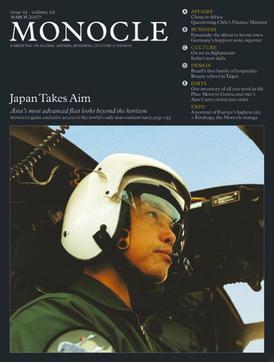
Monocle magazine is a hopeless load of cobblers, stuck together like some primary school craft project from whatever marketing bollocks Winkreative have been paid to puke on to a page that month - then they have the balls to charge you five quid for the privilege*1.
That said, it's the only magazine I actually buy each month and I take great delight in savouring the experience of reading it, mostly because it is the primary source of "here-is-something-interesting-about-Japan-that-is-good-and-not-technology" stories. Yes, this spout rag for metrosexual internationalists with platinum frequent flyer accounts is about the best place to find out about positive stories about Japan available anywhere on UK news-stands.
And their website, mostly horrible and clearly designed by print orientated folks, actually has a very interesting and diverse column, cheesily entitled the Monocolumn (dya see wad they did?) which this week has an intriguing piece about micro-breweries in Japan, or rather the lack of them.
I was surprised by the cost that they mention. A million dollars sounds like a lot to me - that's what? About £640k? I seem to remember watching the first steps of some little brewery in a garage in Nottingham that I used to pass on the way home from town and from the look of the place that must have been started on what they had left after 2 pints o' mild and packet of salted. Judging from the quality of the pull badges you get from some UK breweries*2 they clearly don't spend anything like that here. OK, someone like BrewDog may have done - check out their spanky metal thingies - but others like Shotover don't sound like they have.
I think that's it's a real shame that there aren't more opportunities for craft brewing in Japan, because I am absolutely confident that if there were, they would be stellar. This kind of small, dedicated artisan business is the sort of thing that I know Japan does very well - all the kind of attention-to-detail service and craft coffee experiences I have had in Japan would be expressed perfectly in beer. I can imagine that it would be exactly the sort of thing to draw folks out in to the countryside. Damn, if I didn't know nothing about beer myself, I'd be tempted to head off to a quite valley in Nagano and give it a go myself.
Right then, other reasons I find Monocle interesting are: because they have, or at least had, a monthly manga called Kita-Koga (utter rubbish); the Editor-at-large is Hidetoshi Nakata (yes, that one); their illustrator is Japanese; they feature stacks of Japanese artists on their weekly podcast*3; and when I suggested that they change the naming convention of their files for said podcast, they *4 listened and did it - brilliant! Basically it's a fun and remarkably varied read, totally devoid of celebrity*5 and I'm simply jealous that I don't have the kind of income to burn on their lifestyle.
*1 or an eye watering 2,310yen if you are in Japan.
*2 go on, I dare ya, tell me that's not a legitimate method of rating a breweries quality {ahem}
*3 now that I come to think of it, they never call it that.
*4 I wrote to tb himself - I can't imagine that it was he who actually picked it up on his Blackberry, but I like to imagine that it was - perhaps in a quite moment in a Lufthansa First Class lounge en route to Narita. It was to Japanese style YYMMDD format btw - so it appears in numerical order, instead of the other way round.
*5 unless you know fashion designers on obscure brands - and that's a fairly legit form of minor-celebdom I guess. Actually, the biggest celebs they ever mention are Japanese popstars (mega, if only in Japan) and Alain de Botton. Oh, and foreign politicians.
日曜日, 8月 10, 2008
Funky housing - I want one
With the housing market in the UK in freefall, domestic energy prices surging through the roof and there being something of a shortage of affordable housing, what the country needs is something cheap, quick to build, cost effective to heat and frankly different to the myriad of dull city apartment blocks.
How about these?

Okay, these incredible polystyrene domes from the aptly named International Dome Houses company of Japan don't quite meet the ideal requirements for housing density that would be the most perfect "green" solution (ground level living is, I'm afraid, inherently un-environmentally friendly in a small, crowded place like Southern England), but they check the box on just about every other score.
They cost around £15-20,000 in Japan, then you'd have to pay import duty, but that's not bad. A variety of pieces mean you can come up with variations on the dome theme too. And how damn cool are they to look at?
Image nicked from the unknowing, but quite skilled Erika Snyder. Story spotted on OtakuInternational.
How about these?
Okay, these incredible polystyrene domes from the aptly named International Dome Houses company of Japan don't quite meet the ideal requirements for housing density that would be the most perfect "green" solution (ground level living is, I'm afraid, inherently un-environmentally friendly in a small, crowded place like Southern England), but they check the box on just about every other score.
They cost around £15-20,000 in Japan, then you'd have to pay import duty, but that's not bad. A variety of pieces mean you can come up with variations on the dome theme too. And how damn cool are they to look at?
Image nicked from the unknowing, but quite skilled Erika Snyder. Story spotted on OtakuInternational.
木曜日, 8月 07, 2008
Take an idea - make it smaller
For many years it the received wisdom about Japanese industrial "innovation" that really all Japan was any good at was taking Western products and making them smaller (and later rather better) than their Western rivals. It was true of their bikes, consumer electronics and even cars.
That was a long time ago now, and genuine innovation in many areas (hybrid vehicles, Wii and BrainTraining), and remarkable abilities to miss entire markets repeatedly (can ANY Japanese manufacturer manage an MP3 player that isn't a dull "me-too" clone?) have buried that notion.
So its a breathtaking return to form that sees Toyota, in cahoots with Sony, produce these fantastic mini-Segways.
For me, the problem with Segways was always that the massive bulky shape of the chic uber-scooter was clearly the product of a mind that was oblivious to public transport.
Imagine trying to use a Segway to cruise three miles up hill and down dale across a city like Bristol. In late Autumn. In the rain. Not going to happen for so many reasons.
But if I could throw it in the luggage rack on the train, or as long as I could be sure no nutters would sit next to me, on the bus, then use it just at either end - exactly as the designers at Toyota would no doubt be thinking, then we have a winner. Brilliant.
Thanks to Mari for bringing this one to my attention.
火曜日, 8月 05, 2008
Green village on Shikoku
Just flitting through a bunch of tabs on my reader I found this interesting photo story about Kamikatsu, a small village in the hills of Shikoku that is attempting to go entirely sustainable - eliminating the need for landfill and recycling or reusing everything.
This is serious recycling - none of that "we don't take anything other than type 1 or 2 plastics and you deal with your own plastic bags" attitude here. There are 34 categories to sort your stuff in to!

This kind of initiative seems to the sort of thing that the village structure of Japan can facilitate. From what I read they seem to be much more self-governing, still running on models that Edo-era villagers would recognise. By contrast, my own experience of a village in Shropshire, in the rural hinterland of the English/Welsh border was of a place where you knew one or two families with kids your own age and no-one else had anything to do with each other. You'd never rustle up this kind of cooperation there.
火曜日, 7月 29, 2008
Japan Tourism - Battleship Island
I love Japan - it forever gives up new secrets. Look at this...

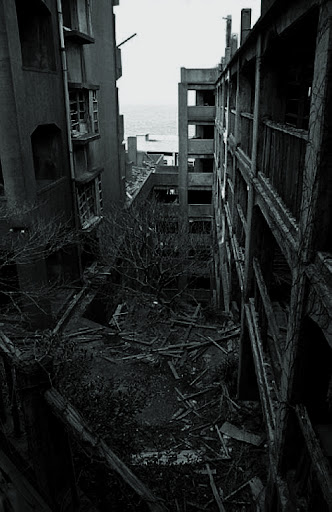
Hashima is an abandoned island to the west of Nagasaki that earned the forbidding moniker "Gunkanjiima" or Battleship Island, and you can clearly see how it got that.
Built by Mitsubishi, starting in the 1890s and continuing well into the 20th century, Hashima was reclaimed from the sea with the goal of extracting coal from the sea floor. I can only imagine what an horrific job that must have been, given that the whole enterprise began right in the earliest period of the undersea business.

The island was occupied as late as the early 1970s, earning the dubious distinction of being the most crowded place on earth - having seen just how tightly packed some of the older streets in Tokyo are one can only imagine what an even more densely fitted population must have been like.
If it looks hellish, that's not a thought that has escaped other observers. It has been the backdrop to movies and the inspiration behind video games.
Currently there is a ban on tourism to the island, though I gather there is a movement to try to open it up to visitors.
Thanks to this post at MutantFrog for leading me to this one at Odee.
Check out these images from Picasa.
Hashima is an abandoned island to the west of Nagasaki that earned the forbidding moniker "Gunkanjiima" or Battleship Island, and you can clearly see how it got that.
Built by Mitsubishi, starting in the 1890s and continuing well into the 20th century, Hashima was reclaimed from the sea with the goal of extracting coal from the sea floor. I can only imagine what an horrific job that must have been, given that the whole enterprise began right in the earliest period of the undersea business.
The island was occupied as late as the early 1970s, earning the dubious distinction of being the most crowded place on earth - having seen just how tightly packed some of the older streets in Tokyo are one can only imagine what an even more densely fitted population must have been like.
If it looks hellish, that's not a thought that has escaped other observers. It has been the backdrop to movies and the inspiration behind video games.Currently there is a ban on tourism to the island, though I gather there is a movement to try to open it up to visitors.
Thanks to this post at MutantFrog for leading me to this one at Odee.
Check out these images from Picasa.
土曜日, 10月 06, 2007
Is there any point?
For some reason I got it in my head that the cut off point for JLPT applications was mid-October. It wasn't. It was yesterday.
But no fear - this isn't a recent discovery - just one that I made last weekend.
I duly got the application away recorded delivery on Monday with, hopefully, enough of a margin to get it in by Friday, 6pm. But then you can never be sure with the terminal patient, the Post Office. And sure enough I may have been scuppered by the strike that has brought the entire postal network to a grinding halt mid-week.
So now I have just to wait...
土曜日, 7月 28, 2007
If you're going to take one holiday this year...
...make it this one: One Life.
Lovely idea - I really hope it works out. I know from experience (cycling to work a couple days a week instead of riding the train) that cycling is about the BEST way to see Japan. These tours would be great. Maybe some day I'll get to join Kevin on one.
金曜日, 7月 06, 2007
Commercial de ja vous
When you go anywhere or do anything in Japan you get this strange feeling of "seen that before" whenever you look at ANYTHING. Seriously. The same names crop up time and time again. It's not that there aren't many names in Japan mind you - it just probably is the same name.
A zaibatsu was an single company that covered many fields. They sprang up, for the most part, during the peace of the Tokugawa period (1600-1853). These entities became enormous and a handful dominated the Japanese economy.
They were dismantled by the occupation powers following the occupation of Japan after the war, but they reappeared as a cluster of smaller companies still bearing the same name of their parent companies, usually sharing a common bank. The crucial factor in this is that all the companies tend to own shares in one another and so still share a common bond. They might even integrate themselves in a supply chain, so the mining company supplies the smelting company supplies the materials to the manufacturer. In other cases, individual parts may have gone independant in legal terms, but they still share a common heritage.
Sumitomo, a name still recognisable on the streets of Japan is a typical example. Founded in 1630 as a shop selling medicines and books, it branched out in to metallurgy (naturally) and nowadays, as a keiretsu, can be found in forestry, mining, armaments, consumer electronics and, of course, banking.
Here are the main players, their banks and a few of their headline brands:
Another interesting feature of all this is that the people who worked for these companies would follow the line. So, again using Sumitomo as an example, if you were a worker for NEC (you assembled stereos), you might ride to work on the Keihan railway, living in a commuter town on that line build largely by Sumitomo real estate. You would bank with Sumitomo, who may have lent you the money to buy your Mazda and when you get home in the evening you would be most likely to unwind with a nice Asahi.
Sounds a bit fuedal really.
,
A zaibatsu was an single company that covered many fields. They sprang up, for the most part, during the peace of the Tokugawa period (1600-1853). These entities became enormous and a handful dominated the Japanese economy.
They were dismantled by the occupation powers following the occupation of Japan after the war, but they reappeared as a cluster of smaller companies still bearing the same name of their parent companies, usually sharing a common bank. The crucial factor in this is that all the companies tend to own shares in one another and so still share a common bond. They might even integrate themselves in a supply chain, so the mining company supplies the smelting company supplies the materials to the manufacturer. In other cases, individual parts may have gone independant in legal terms, but they still share a common heritage.
Sumitomo, a name still recognisable on the streets of Japan is a typical example. Founded in 1630 as a shop selling medicines and books, it branched out in to metallurgy (naturally) and nowadays, as a keiretsu, can be found in forestry, mining, armaments, consumer electronics and, of course, banking.
Here are the main players, their banks and a few of their headline brands:
MitsubishiI must stress, the zaibatsu do not necessarily OWN the companies in the family, but they may still have close ties and more than likely a mutual shared ownership of shares. The leaders may get together to bond from time to time. In the case of Sumitomo, for example, it is said that they still all obey the rules laid out by the founder 350 years ago.
Bank of Tokyo-Mitsubishi UFJ
Mitsubishi Corporation, Kirin Brewery, Mitsubishi Electric, Mitsubishi Fuso, Mitsubishi Motors, Nippon Yusen, Shin-Nippon Petroleum, Tokio Marine and Fire Insurance, Nikon
Mitsui
Sumitomo Mitsui Bank
Fuji Photo Film, Mitsui Real Estate, Mitsukoshi, Suntory, Toshiba, Toyota
Sumitomo
Sumitomo Mitsui Bank
Asahi Breweries, Hanshin Railway, Keihan Railway, Mazda, Nankai Railway, NEC, Sumitomo Real Estate
Fuyo
Mizuho Bank
Canon, Hitachi, Marubeni, Matsuya, Nissan, Ricoh, Tobu Railway, Yamaha
Dai-Ichi Kangyo
Mizuho Bank
Fujitsu, Hitachi, Isuzu, Itochu, Tokyo Electric Power
Sanwa ("Midorikai")
Bank of Tokyo-Mitsubishi UFJ
Hankyu Railway, Keisei Railway, Kobe Steel, Konica Minolta, Kyocera, Orix, Shin-Maywa, Takashimaya, Toho
Another interesting feature of all this is that the people who worked for these companies would follow the line. So, again using Sumitomo as an example, if you were a worker for NEC (you assembled stereos), you might ride to work on the Keihan railway, living in a commuter town on that line build largely by Sumitomo real estate. You would bank with Sumitomo, who may have lent you the money to buy your Mazda and when you get home in the evening you would be most likely to unwind with a nice Asahi.
Sounds a bit fuedal really.
,
火曜日, 6月 26, 2007
A grim reality?
Why don't we listen to our inner voice? This week I told myself "buy that and your love of Japan will suffer." I did, and it has....
The Rogue "gave me" a Borders book voucher for Father's Day last week. I love book vouchers. I got one because Kazue complains that I always give people the same thing, which is largely true. I see book vouchers, particularly for Borders here in Bristol, as the gift that gives twice - on one level you get a few quids worth of books, but you also get the fun of looking for a book to buy. Borders rocks for me as I can stroll about on an evening (open till 10pm), browsing books on Japanese (nice Kodansha dictionary), IT, businessey stuff, new fiction, Iain Banks and so on.
I wondered about buying some GTOs (nearly half way) or perhaps a guide to Samurai warfare techniques but I was attracted to Dogs and Demons by Alex Kerr. I'd heard about this book when it was released, but hadn't ever had a chance to buy it. But as I'm thinking about returning again I thought a browse might be in order. I kinda wish I hadn't.
Kerr's hypothesis, not unique, is that Japan is eating itself. It is country that has never really gotten to grips with the fact it is an advanced nation and it going hell for leather along the same path that it set for itself in 1940 (even 1853) without ever really adjusting for the reality of modern living. This, he argues, explains the inability to reform the banking sector, the obsession with building huge roads way over-engineered (the road on stilts to Nikko is one I remember), the "messy" appearance of streets and so forth.
It makes for very grim reading - the never ending march of progress to a goal that Japan achieved in the 1980s. The chapter on buried pollution in particular is depressing - especially if you are thinking of living there. It seems from Kerr's reporting that you are taking your life in to your own hands if you do!
I think it is an important book, and worth reading by every potential long term NJ resident, even more so by Japanese themselves, but only if you are willing to face the inevitable moments of loathing it will induce.
日曜日, 6月 17, 2007
We -illas stick together
A few months ago I posted something with Godzilla on the grounds that our names are similar, despite it not really being in any way, even tenuously, language related.
Well, much as I hate to post too frequently, here's another one: Fumakilla - a Japanese roach spray. Frankly, it's another "only in Japan" moment, and of course, my little boy LOVED it.
月曜日, 5月 21, 2007
...and no tag backs...
Hmm, seven things I'm willing to reveal here?
1. I apparently look like Hugh Grant - this has been a regular comment from people I know and those I've just met met since I was about 19. Sadly, I've never dated anyone that looks good in a pink cat suit. Frankly, neither has Hugh or anyone else. Pink cat suits are inherently a bad idea.
2. My last words to my Mother as I went through the gates at Heathrow were "Don't worry, I won't come back with a Japanese wife or anything silly like that." No, indeed; I came back with much more than that.
3. I used to play basketball and sucked for five years at school when I played with Tony. But I was taller than him so it was occasionally possible to stop him. This pic documents the county championship winning team of '93. Tony, as our mascot, sits front centre; I'm trying to psyche the camera man out in the number 10; Ian (6) and Ed (9) are subjects of posts by Tony and I bumped in to Joe this week - pretty much one of the first times since this picture was taken... Owain (13), Mike (11) and Graham (12) are MIA.

4. I secretly still like to go skateboarding at the age of 30. This is frowned upon by parents and associates as deviant behaviour so when I have meetings with clients I throw my deck in the back of the car, finish up when I can, then skulk around playing fields looking for shapely bits of of plywood or concrete.
5. Bristol Japan Club is Bristol's premier venue for people in Bristol who are interested in Japanese culture. Most people who go there probably have no idea what my connection to Japan is - my wife never, ever goes. I used to sell Japanese books there, mimicking my love of Good Day Books, but I lost money on the venture.
6. I read the Guardian. I have to keep this secret from my parents, who would doubtless be offended at the soft-bellied liberalism this implies.
7. I was border-line narcoleptic at uni and slept on a speaker in a night club, on the stairs in halls, in the hallway, in a shop doorway, in a park, in the library, in lectures, etc. This was a serious medical condition you understand and not in any way related to consumption of alcohol.
1. I apparently look like Hugh Grant - this has been a regular comment from people I know and those I've just met met since I was about 19. Sadly, I've never dated anyone that looks good in a pink cat suit. Frankly, neither has Hugh or anyone else. Pink cat suits are inherently a bad idea.

2. My last words to my Mother as I went through the gates at Heathrow were "Don't worry, I won't come back with a Japanese wife or anything silly like that." No, indeed; I came back with much more than that.
3. I used to play basketball and sucked for five years at school when I played with Tony. But I was taller than him so it was occasionally possible to stop him. This pic documents the county championship winning team of '93. Tony, as our mascot, sits front centre; I'm trying to psyche the camera man out in the number 10; Ian (6) and Ed (9) are subjects of posts by Tony and I bumped in to Joe this week - pretty much one of the first times since this picture was taken... Owain (13), Mike (11) and Graham (12) are MIA.
4. I secretly still like to go skateboarding at the age of 30. This is frowned upon by parents and associates as deviant behaviour so when I have meetings with clients I throw my deck in the back of the car, finish up when I can, then skulk around playing fields looking for shapely bits of of plywood or concrete.
5. Bristol Japan Club is Bristol's premier venue for people in Bristol who are interested in Japanese culture. Most people who go there probably have no idea what my connection to Japan is - my wife never, ever goes. I used to sell Japanese books there, mimicking my love of Good Day Books, but I lost money on the venture.
6. I read the Guardian. I have to keep this secret from my parents, who would doubtless be offended at the soft-bellied liberalism this implies.
7. I was border-line narcoleptic at uni and slept on a speaker in a night club, on the stairs in halls, in the hallway, in a shop doorway, in a park, in the library, in lectures, etc. This was a serious medical condition you understand and not in any way related to consumption of alcohol.
登録:
投稿 (Atom)