火曜日, 3月 16, 2010

Who has more phones?

Well now, here's something I don't have any strong feelings about:


The UK has more phones per capita than Japan - 84 phones per 100 people versus about 62. I guess that's the risk you face when a good percentage of your domestic market were born before regular phones were widespread...

Thanks to the enraged folks at JunkCharts for bringing it to my attention.

月曜日, 3月 01, 2010

Japan - frequently shaken, but not as often stirred.

Following up the colossal and tragic earthquake in Chile this week, the Guardian Datablog have an article that summarises the deadliest earthquakes since 1970.

Japan, a place that in my head is singularly linked with earthquakes, only appears once - for the 1995 Kobe earthquake that claimed 5,502 lives.  I was surprised by this initially, but then I thought about it some more. Japan is a rich country, with effective building standards and (mostly) honest construction companies. It may well have been struck by many worse earthquakes than some of those here, but it deals with it with less trauma than those affected by the seismic events recorded in the article.

As one of the comments says, "God must hate poor people." My heart goes out to those in Chile, but looking at the list it's easy to see that people in Indonesia, China and Iran have been terribly affected by earthquakes too in the same period. These are countries that are hard pressed to cope with social problems at the best of times - the misery of a natural disaster is too much.

Reading the article about the Kobe, or Great Hanshin Quake was an eye-opener: the slump in the market caused by the quake, in the Guiness Book of Records for the costliest natural disaster, has been attributed as a contributing factor in the figurative collapse of Barings Bank and, valued at 2.5% of GDP, a fairly major contribution to the recession that Japan was in the midst of at the time.

At least this fate is one that is unlikely to affect the UK when we stagger the same path shuffled along by Japan's post-bust zombie economy...

火曜日, 2月 09, 2010

Wanna start a brewery? In Japan you can't.

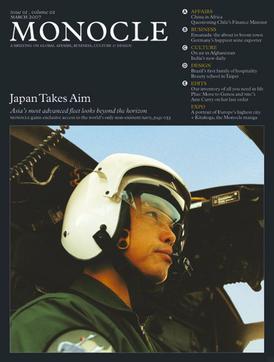
Monocle magazine is a hopeless load of cobblers, stuck together like some primary school craft project from whatever marketing bollocks Winkreative have been paid to puke on to a page that month - then they have the balls to charge you five quid for the privilege*1.

That said, it's the only magazine I actually buy each month and I take great delight in savouring the experience of reading it, mostly because it is the primary source of "here-is-something-interesting-about-Japan-that-is-good-and-not-technology" stories. Yes, this spout rag for metrosexual internationalists with platinum frequent flyer accounts is about the best place to find out about positive stories about Japan available anywhere on UK news-stands.

And their website, mostly horrible and clearly designed by print orientated folks, actually has a very interesting and diverse column, cheesily entitled the Monocolumn (dya see wad they did?) which this week has an intriguing piece about micro-breweries in Japan, or rather the lack of them.

I was surprised by the cost that they mention. A million dollars sounds like a lot to me - that's what? About £640k? I seem to remember watching the first steps of some little brewery in a garage in Nottingham that I used to pass on the way home from town and from the look of the place that must have been started on what they had left after 2 pints o' mild and packet of salted. Judging from the quality of the pull badges you get from some UK breweries*2 they clearly don't spend anything like that here. OK, someone like BrewDog may have done - check out their spanky metal thingies - but others like Shotover don't sound like they have.

I think that's it's a real shame that there aren't more opportunities for craft brewing in Japan, because I am absolutely confident that if there were, they would be stellar. This kind of small, dedicated artisan business is the sort of thing that I know Japan does very well - all the kind of attention-to-detail service and craft coffee experiences I have had in Japan would be expressed perfectly in beer. I can imagine that it would be exactly the sort of thing to draw folks out in to the countryside. Damn, if I didn't know nothing about beer myself, I'd be tempted to head off to a quite valley in Nagano and give it a go myself.

Right then, other reasons I find Monocle interesting are: because they have, or at least had, a monthly manga called Kita-Koga (utter rubbish); the Editor-at-large is Hidetoshi Nakata (yes, that one); their illustrator is Japanese; they feature stacks of Japanese artists on their weekly podcast*3; and when I suggested that they change the naming convention of their files for said podcast, they *4 listened and did it - brilliant! Basically it's a fun and remarkably varied read, totally devoid of celebrity*5 and I'm simply jealous that I don't have the kind of income to burn on their lifestyle.

*1 or an eye watering 2,310yen if you are in Japan.
*2 go on, I dare ya, tell me that's not a legitimate method of rating a breweries quality {ahem}
*3 now that I come to think of it, they never call it that.
*4 I wrote to tb himself - I can't imagine that it was he who actually picked it up on his Blackberry, but I like to imagine that it was - perhaps in a quite moment in a Lufthansa First Class lounge en route to Narita. It was to Japanese style YYMMDD format btw - so it appears in numerical order, instead of the other way round.
*5 unless you know fashion designers on obscure brands - and that's a fairly legit form of minor-celebdom I guess. Actually, the biggest celebs they ever mention are Japanese popstars (mega, if only in Japan) and Alain de Botton. Oh, and foreign politicians.

日曜日, 1月 17, 2010

Holiday in Japan and don't get ripped off

Sure, it's extremely easy to blow a fortune travelling around Japan. But it doesn't have to be that bad. My own experiences were of reasonably priced venues, cheaper transport options and a lot of free pavement pounding. I've always had a great time doing it and really think you get a better view of what the country is really like (I used a similar approach in the States and enjoyed that too).

However, when friends ask me about what they should do on a trip to JApan, I'm instinctively wary about what I recommend as I know that, no matter what I can suggest, all the evidence is that, for the holidaying visitor, it's going to cost them a LOT.

So it's a relief to see someone taking a holiday in Japan, and on a reasonable budget too. Really 10,000 yen is not a great amount when you stack it up against other holidays you might take. Nice one Guardian writer.

金曜日, 1月 15, 2010

Ways in which UK and Japan are similiar (part 73,284)


That Denmark, the UK and Japan are all so similar in their GDP doesn't surprise me - I'm sure France, Germany, Italy, Canada and Australia would be too. I'm a little amazed by just how far America is out in front.

I'm sure that certain people I know might be a little surprised that UK actually beats Japan - and we do it with considerably shorter hours in the office - is there a stat on average working hours in the two countries? I'm sure that it would make the difference more extreme if it the GDP value was compensated for the time spent in earning it.

月曜日, 1月 04, 2010

Words you need to know in Japanese

Well, according to STA Travel that is:


Curious that of all the words they suggest you might need to know, "chikan" is in there with "hai" and "delicious". In fairness, they do offer these in the spirit of "useless info", however it's hard to see how any of these, with the exception of word number three, are actually useless, unless you do indeed take their advice and use these at home.

Perhaps I'm having a sense of humour bypass, but this gets my goat. It is all part of a cumulative effect that undermines the respect that one is likely to accord to the country you are visiting.

土曜日, 1月 02, 2010

On "rekijo" - Roland Buerk lives up to his name

This piece by the BBC's Tokyo correspondent demonstrates what for me are the typical lazy approaches to Japan articles in UK press.


What is it that this shows about Japan that is actually all that unusual? Not much, I reckon.

The idea that Japan is mired in the past? You only have to look at the Tokyo skyline to realise this isn't really true, and have a brief look around the UK to see other places that are just as stymied by history. A history theme park? Isn't that what somewhere like Ironbridge is all about, only less involving and interesting? I've visited O-Edo Onsen* in O-Daiba and it offers something similar - a fun diversion that is well worth the games it plays with historical accuracy.

How about the assertion that these girls are "escaping the present" in their interest in the past? Well, surely an interest in the past as a displacement activity is an improvement on the broad disengagement with reality around one that obsessions with Strictly Come Dancing and X Factor engender?

I think the unmentioned aspect here is the cosplay that is alluded to in the final part of the clip, and we all know that if you want to have a laugh at Japan, cosplay is a safe trope for which one does not really need to work too hard. And as a final note, how likely is it that this is, as is so often the case, actually a very minor activity with a handful of exponents that is looked upon as much as a novelty by J-media, but which is presented to the world here as a mainstream development? Perhaps I'm cynical in trying to find stories to blog about.

* Wow, do you see on that link that it is open 11am to 9am? Not a misprint, it's open 22 hours, so you can head there overnight if you wish. Cool.

MSNBC Japanese law bollocks

the Japanese government has imposed a waistline limit for anyone over the age of 40.

Yes, that's right, it's actually illegal to be overweight. For men, the limit is 33.5 inches and for women, 35.4.

This has to be bollocks, right? I did a cursory scan to see mention of this elsewhere, but couldn't. Please someone tell me I'm not mad.

水曜日, 12月 30, 2009

China - the next Japan?

Seems an unlikely comparison to make, but there are similarities - fast growing economy, export focus, in the Far East, er, black hair and foxy chicks? Hmm, Still, the Economist wonder if the rapid growth of China might follow a similarly spectacular path as Japan. I doubt it.


(Click on the picture to see how it pans out)

Far more likely is the stagnation of the UK economy in a Japanese fashion. Fashionable zombieism infects the UK banking sector. Hmmm.

火曜日, 8月 18, 2009

日記帳1番

今日、昼ごはん時に急がしすぎましたが日記帳を書きませんでした。 今から12月6日まで、毎日日本語を勉強したい。

Hmm, it's kinda a late and I want to go to sleep, so that will have to do.

One new word mind you, or at least one new version of a word I thought I knew. 日記帳(にっきちょう) means 'diary'. No new grammar point as I have not had a chance to look at one today.

木曜日, 3月 05, 2009

Anki updates

Exciting news from Anki, the excellent Leitner-derived spaced repetition system.

It creeps ever closer to the magic v1.0, now at v0.9.9.6, but along the way it has been seeing ports across to an ever increasing number of platforms, beyond the usual desktop varieties of Windows, Mac, Ubuntu and Fedora. You can now run Anki on:
  • vanilla iPod/iPhone
  • hacked Maemo iPhone
  • Maemo N770
  • Windows Mobile
and for me, most excitingly, in the pipeline there is
  • Android
This will be the shift that really makes SRS the ultra-powerful tool that evidence suggests it can be.

水曜日, 1月 28, 2009

DS Language learning

Not sure there's anyone out there any more, but worth mentioning this to see the response...

Just seen that there are two Japanese learning games on the DS here in the UK
Not sure how good these are, but one reviewer rated the first of these (MYL isn't out until next month)...
If you already have a DS and are serious about learning Japanese, you should get this game to help along your study, particularly if you are not fortunate enough to have a Japanese speaker giving you regular lessons.
So this may not be much use for me and the boy, but I'm interested as it would help my visual learning bias. There is one pretty major grip about kanji stroke order, which could be really annoying, but as a tool for learning - imagine having a DS version of fb's KanjiBox app (v2 in beta now!). How cool would that be?

The same reviewer also mentions a couple of Japanese titles:
I've purchased some Japanese games for the DS recently, which have been useful for Kanji and Kana learning (Kanji Sonomama DS Rakubikjiten and Tadashii Kanji Kakitori kun - both available from Amazon Japan).
Anyone used any of these? Let me know and I may try getting hold of them.

木曜日, 11月 06, 2008

JLPT RIP?

It appears that the venerable Japanese Language Proficiency Test is to be no more!

Well, actually it has another year of life left (2009 will be the last one) before it is rippped up, burnt and replaced with... the revised JLPT.

Big deal I hear you cry. Well, there is a significant change afoot - the revised JLPT, which will still only test receptive skills but will get a funky new prefix to distinguish it from the old one, will be available in 5, count 'em (five) levels; again numbered from hardest to easiest; N1 (the hardest) will come in slightly tougher than the current JLPT 1-kyuu. At the easier end of the spectrum, N5 will be a direct, like-for-like replacement of the current 4-kyuu.

Well, plus ca change - the difference comes in the middle. Right in the middle actually. The new N3 will be an intermediate level, bridging the gulf between the current 2-kyuu and 3-kyuu.

For many students this leap is quite a challenge - the step up requires a three-fold expansion of kanji knowledge and requires an awareness of four times as much vocabulary. After the fairly moderate increase from 4-kyuu to 3-kyuu (ha! get me, I haven't managed yet have I?) this can present quite a daunting challenge unless you are in country (I know a few people who have tried and failed 2-kyuu here in the UK) though that's not to lessen the achievement of those who do manage it in Japan - it's still the same exam, after all.

Which brings us to the other change that will occur at the same time: biannual testing. Yes, for those who do fluff either of the harder level (N1, N2) exams, the opportunity will be there for a retest in July, though only for those in Japan, or its neighbours Korea, China and Taiwan.

Thrilling stuff. Let's just hope that I'm in a position to apply for N3 by 2010, the inaugral year...

水曜日, 10月 15, 2008

Got Anki?

Ooh, joy of joys, another Anki update! As it creeps its way inexorably toward a v1 release, here is what Anki looks like 0.0.1.7 of its development to go:I'm a big fan. After years of trying to learn vocab and failing, Anki REALLY, finally, seems to be making a bit of a difference. As I spend more time trying - hopelessly for the most part - to chat in Japanese at home, I snatch bits of language and stuff them in to Anki. Slowly I'm getting to the point where I remember those bits the next time I need to use them. Knee. 膝。ひざ。See? Working already.

Why is Anki so good? Because it is based on spaced repetition - probably one of the most significant points of research supported understanding in learning theory, and yet one of the most under used.

As my son gets older I'm going to be encouraging him to use one to support his learning (perhaps I should work out about the sounds now). Who knows, he may even get to work with version one!

木曜日, 10月 02, 2008

N700系 「のぞみ」

Well, for some time I've been meaning to do a series on the shinkansen, or 'bullet' trains, in my son's スーパーのりものシリーズ (super vehicles) book, しんかんせん. So today we start with the first and foremost, the mightly N700.

東京えき~博多駅(福岡)の間を走っています。最高速度は時速300km。お客さんを乗せて、日本で一番速いスピードで走れるのが自慢の新幹線です。カーブを曲がる時でも スピードを落とさず、少ない揺れで上手に曲がることができます。
Right then, what does this mean? Here's what I think...
The train runs between Tokyo and Hakata in Fukuoka Prefecture. Its top speed is 300km/h. [Gets a bit trickier now, but something like...]Customers can take pride in riding the fastest bullet train in Japan. The train leans in to corners so it doesn't have to slow down, [and I'm paraphrasing the next bit] it corners without wobbling.
Of course, I may well (ie am) some way off with this translation, so feel free to correct me or add anything you think may be useful.

Key words :

  • 走っている (はしっている)= running - literally "running", just like with a pair of Nikes. Odd that it is the same turn of phrase in Japanese as it is in English - speakers of many European would screw up their faces if you used that, after all, trains don't have legs.
  • 最高速度 (さいこうそくど)= top speed - that phrase again "さいこう"(in romaji, "saikou"), meaning top, best, excellent.
  • 落とさず (おとさず) = is, I think, something like "without reducing", but I can't be sure since I can't find it in my books. However, the root verb 落ちる is also useful in the sense of dropping (a ball for example) or failing (a language exam for example).
About the train
This bizarre looking duck faced train is the quickest in Japan, and for some time was the fasted in the world. It is a 'nozomi' which is the fastest, least stoppingest type of shinkansen around. Inside the seats are in groups of three, either side of the wide aisle, which makes this train very much wider than a UK train.

水曜日, 10月 01, 2008

Coming soon:スーパーのりものシリーズしんかんせん

I've found a great book about one of Japan's best features - its trains. I'm going to share it with you, but first, here's a taster of what to expect...

N700形 のぞみ
東京駅~博多駅(福岡)の間を走っています。最高速度は時速300km。お客さんを乗せて、日本で一番速いスピードで走れるのが自慢の新幹線です。

Thrilling stuff, I'm sure you'll agree.

日曜日, 8月 10, 2008

Funky housing - I want one

With the housing market in the UK in freefall, domestic energy prices surging through the roof and there being something of a shortage of affordable housing, what the country needs is something cheap, quick to build, cost effective to heat and frankly different to the myriad of dull city apartment blocks.

How about these?


Okay, these incredible polystyrene domes from the aptly named International Dome Houses company of Japan don't quite meet the ideal requirements for housing density that would be the most perfect "green" solution (ground level living is, I'm afraid, inherently un-environmentally friendly in a small, crowded place like Southern England), but they check the box on just about every other score.


They cost around £15-20,000 in Japan, then you'd have to pay import duty, but that's not bad. A variety of pieces mean you can come up with variations on the dome theme too. And how damn cool are they to look at?

Image nicked from the unknowing, but quite skilled Erika Snyder. Story spotted on OtakuInternational.

木曜日, 8月 07, 2008

Take an idea - make it smaller

For many years it the received wisdom about Japanese industrial "innovation" that really all Japan was any good at was taking Western products and making them smaller (and later rather better) than their Western rivals. It was true of their bikes, consumer electronics and even cars.

That was a long time ago now, and genuine innovation in many areas (hybrid vehicles, Wii and BrainTraining), and remarkable abilities to miss entire markets repeatedly (can ANY Japanese manufacturer manage an MP3 player that isn't a dull "me-too" clone?) have buried that notion.

So its a breathtaking return to form that sees Toyota, in cahoots with Sony, produce these fantastic mini-Segways.


For me, the problem with Segways was always that the massive bulky shape of the chic uber-scooter was clearly the product of a mind that was oblivious to public transport.

Imagine trying to use a Segway to cruise three miles up hill and down dale across a city like Bristol. In late Autumn. In the rain. Not going to happen for so many reasons.

But if I could throw it in the luggage rack on the train, or as long as I could be sure no nutters would sit next to me, on the bus, then use it just at either end - exactly as the designers at Toyota would no doubt be thinking, then we have a winner. Brilliant.

Thanks to Mari for bringing this one to my attention.

火曜日, 8月 05, 2008

Green village on Shikoku

Just flitting through a bunch of tabs on my reader I found this interesting photo story about Kamikatsu, a small village in the hills of Shikoku that is attempting to go entirely sustainable - eliminating the need for landfill and recycling or reusing everything.

This is serious recycling - none of that "we don't take anything other than type 1 or 2 plastics and you deal with your own plastic bags" attitude here. There are 34 categories to sort your stuff in to!


This kind of initiative seems to the sort of thing that the village structure of Japan can facilitate. From what I read they seem to be much more self-governing, still running on models that Edo-era villagers would recognise. By contrast, my own experience of a village in Shropshire, in the rural hinterland of the English/Welsh border was of a place where you knew one or two families with kids your own age and no-one else had anything to do with each other. You'd never rustle up this kind of cooperation there.